


Myopia Control
Myopia is a visual condition caused by elongation of the eye. Often called nearsightedness, myopia causes objects at a distance to become blurred. Myopia most commonly begins in childhood and gradually progresses until stabilizing during the late teens or early 20s. The longer the eyeball becomes, the more myopia increases. Having significant amounts of myopia not only causes the need for dependence on glasses or contacts, it also increases the risk for sight threatening conditions such as glaucoma, maculopathy and retinal detachments. The higher the myopia, the greater the risk.
Myopia control is a group of therapies and procedures that optometrists can use to help slow down progression of myopia in children and teens. The goal of myopia control , sometimes called myopia management, is to reduce the elongation of the eye to help slow down the worsening of vision and reduce the risk of more severe sight threatening conditions. We are happy to discuss if myopia control may be right for your child. Learn more about these treatment options below.
What is myopia control?
Stellest Lenses
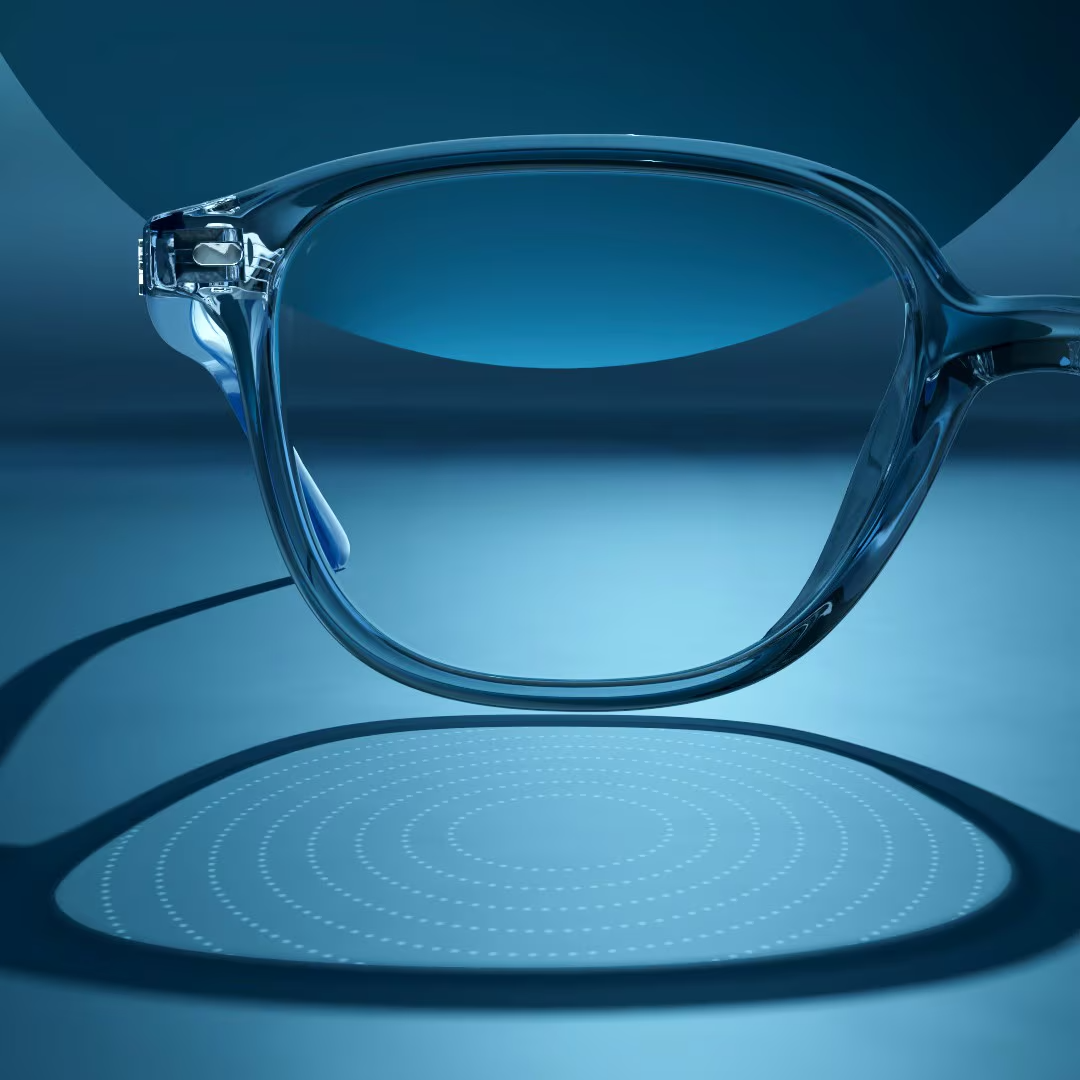
Stellest lenses are the first and only FDA regulated spectacle lenses to slow progression of myopia in children. These lenses are generally for children between the ages of 6 and 12. They may look like ordinary lenses but studies show these lenses slowed myopia progression by an average of 71% and eye elongation by 53% over a period of 2 years. By using H.A.L.T technology, they create an area of myopic defocus which signals the brain to slow eye elongation and myopia progression. Our optical staff has completed the necessary specialized training to fit and offer this lens for our patients.
Atopine Therapy
Atropine is a prescription eye drop that can be used in optometry to dilate the pupil and to treat certain eye conditions such as amblyopia, or “lazy eye”. Clinical trials, however, have shown that atropine can also be used for myopia control. While the exact mechanism of action is not fully understood, it is thought that it works by temporarily dilating the pupil to relax the eye’s focusing which helps to slow down myopia progression. When used at a low dose (of 0.01%), myopia progression can be reduced around 50-60%. Drops are generally instilled daily, most often at bedtime. Atropine Therapy can be prescribed for children 5 and up is usually continued daily for several years or until the eye naturally stabilizes (often in the mid teens).
MiSight
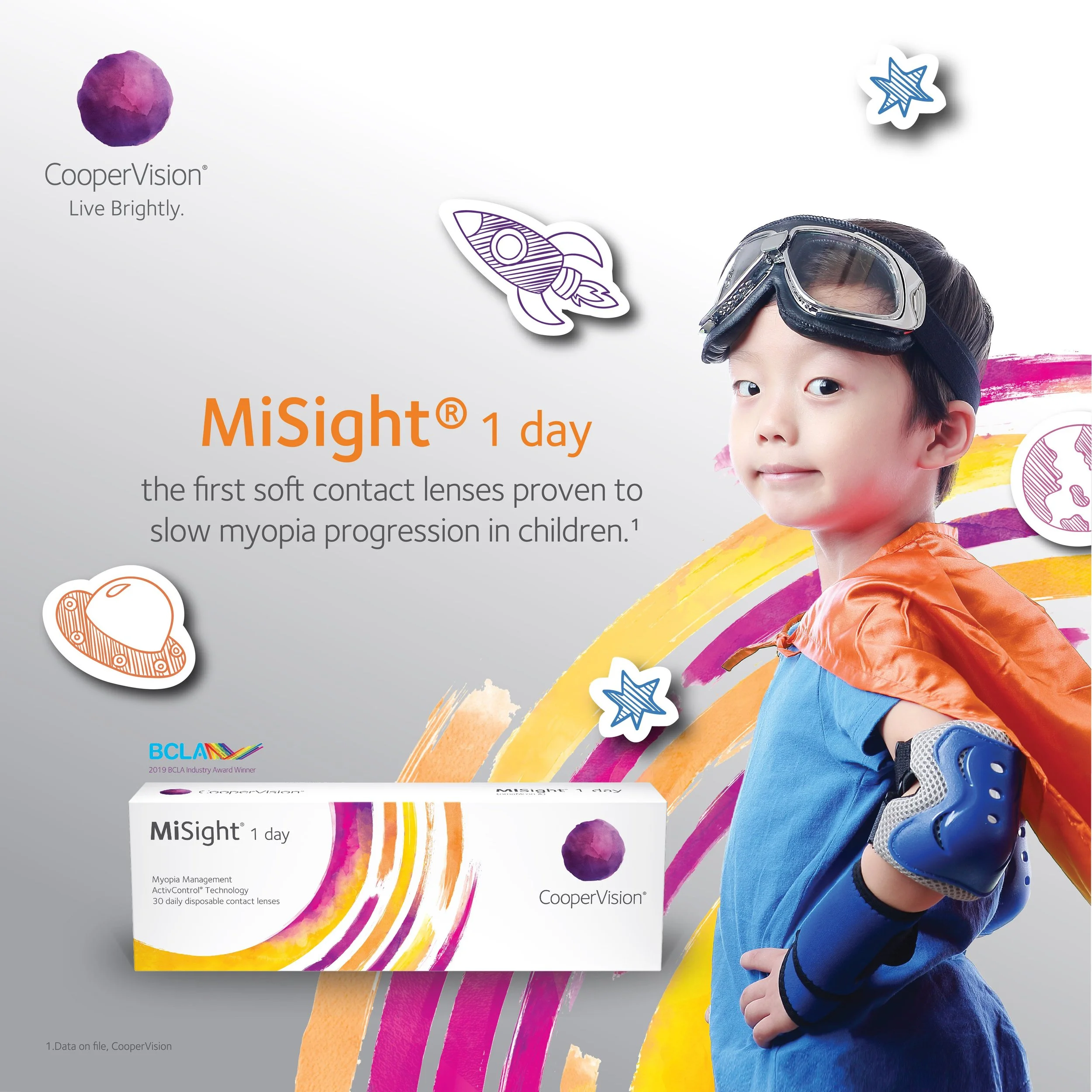
MiSight lenses are soft contact lenses designed to help control myopia progression in children 8 and older. Manufactured by Cooper, these lenses are the first contact lenses to achieve FDA approval for use in myopia control. The lenses have a series of concentric rings that change how light is focused on the retina. By creating areas of defocus, the eye is tricked into slowing elongation and myopia progression. The lenses must be worn at least 6 days a week and are generally used until the eye naturally stabilizes in the teens.
Multifocal Contacts
Contact lenses that have varying prescriptions for distance, intermediate and near in a single lens are called “multifocal contact lenses”. They come in many different designs but for myopia control the “center distance” design has shown to be effective. Similar to the MiSight, the multifocal lenses create an area of defocus on the retina which can signal the eye to slow elongation. Multifocal lenses may be a good option for children who may need a slightly different lens design or fitting approach. than the MiSight.
Have a Question?
Our eye care staff is happy to assist you with any questions or concerns you may have. We also accept electronic appointment requests. Simply let us know your availability and we will do our best to accommodate your requests.